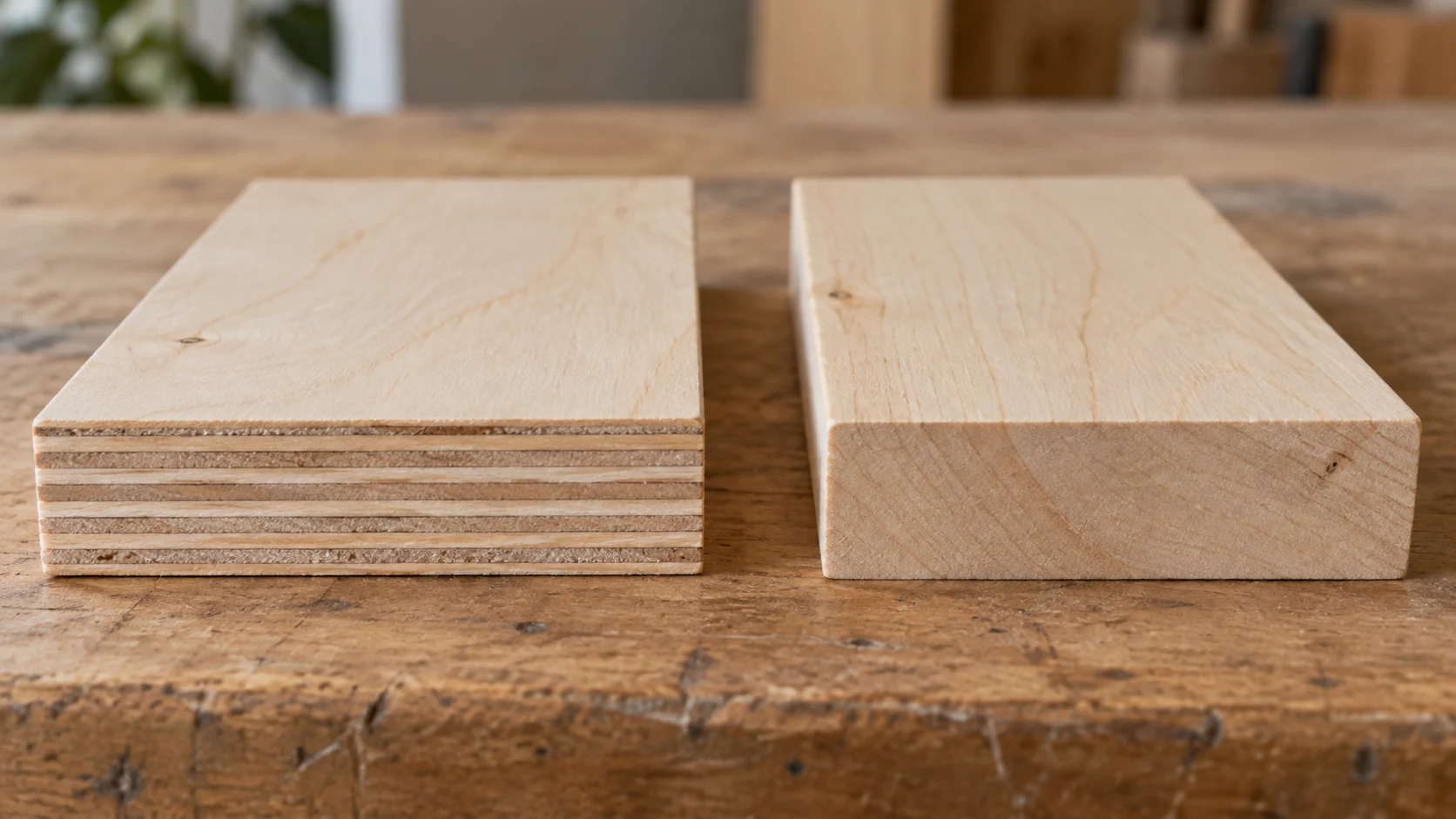
A pyrography pen can mark plywood, but we recommend untreated, unfinished solid wood for the beginner projects on this site. Plywood adds a face veneer, adhesive and underlying layers to the material you are heating. A smooth top surface does not tell you everything about that construction.
If you already have a pack of craft sheets, check what they are before starting. The species name, thickness and a “laser-ready” label do not establish whether a sheet is suitable for a hot pen.
Understand what is under the surface
Plywood is made from bonded wood veneers. The visible face is only its outer layer. Veneer thickness, core construction and adhesives vary between products, so there is no single description that covers every board.
Burning deeply or repeatedly working an area can damage the face and reach the layers beneath it. Sanding also removes part of that face. You cannot assume that the thickness of the whole sheet tells you how much surface wood is available.
Some artists use plywood, but that does not establish the suitability of a different panel in your workshop. For a first project, solid wood removes the uncertainty about a veneer-and-adhesive construction. It still produces smoke and needs the same attention to workspace safety.
Check the edge and the description together
Look for a photograph of an exposed edge, then read the construction details. Alternating layers are a useful clue that the board is plywood. A coated edge, edging strip or unclear photograph can hide that clue.
- Separate species from construction. “Birch” or “basswood” may describe the face veneer rather than a solid piece.
- Look for explicit construction wording. Plywood, veneer and a manufactured core are different from solid wood.
- Check the surface treatment. Unfinished means no finish is described; it does not mean no adhesive exists inside.
- Ask when details conflict. If the title says solid wood but the specifications say plywood, resolve it before using the sheet.
Thin solid wood exists, and thick plywood exists. Neither thickness nor pack size proves the construction. Balsa is also a different wood species, not another word for plywood.
Do not mistake a label for a burning recommendation
| Description | What it does not establish | Your next step |
|---|---|---|
| Basswood or birch plywood | A solid piece of that species | Choose a confirmed solid-wood alternative |
| Unfinished | An adhesive-free core | Check construction separately |
| Laser-ready | Suitability for a handheld pyrography pen | Do not transfer one process claim to another |
| Low-emission or TSCA Title VI compliant | A pyrography safety certification | Keep the beginner-project choice to known solid wood |
TSCA Title VI addresses formaldehyde emissions from covered composite wood products. It is not a test of your panel under a burning pen. Likewise, a no-added-formaldehyde claim does not mean a panel contains no adhesive or that heating it produces no harmful emissions.
Baltic birch remains plywood. Exterior or marine grades describe other performance requirements; neither name is a recommendation for pyrography. We do not suggest low heat, a shallow stroke or a mask as a workaround for an unverified panel.
Choose a solid blank that fits the design
Use a known, untreated, unfinished solid blank with enough room for your picture. A rectangular board suits a wide layout; a shaped plaque can frame a small motif without needing a separate border.
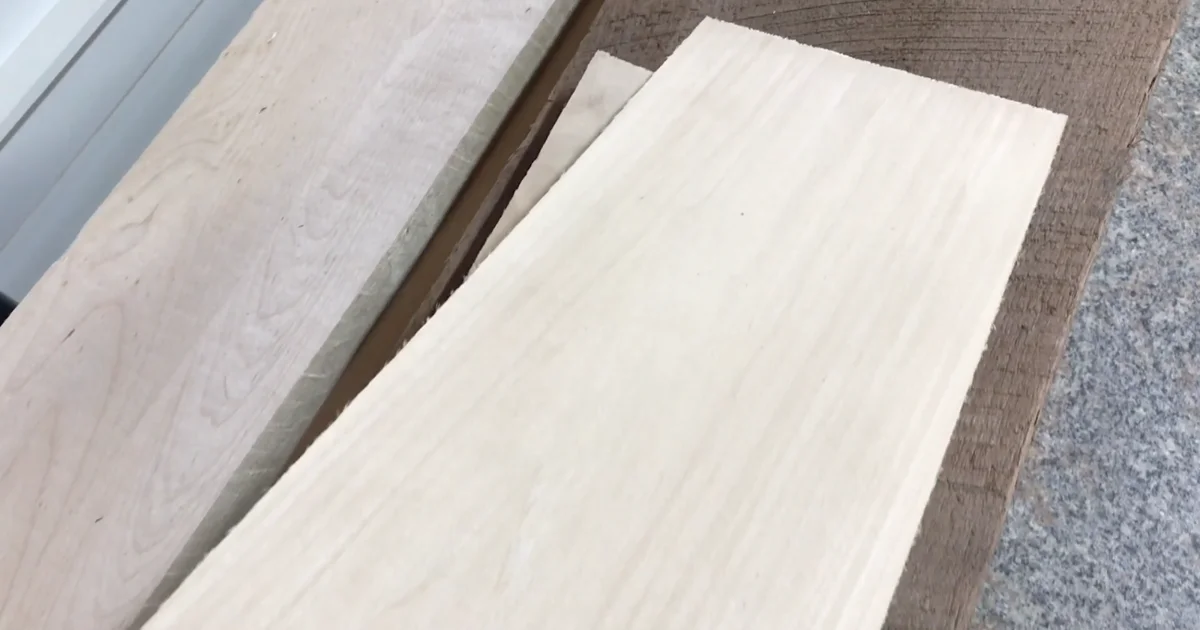
The Make Market 11-by-14-inch basswood oval is an option for a larger indoor picture. It is kiln-dried and lightly sanded. Measure the usable face before transferring your pattern; a smaller suitable solid-wood blank is enough for a compact design.
For larger work, the Foggy Bottom premium basswood planks provide natural bark edges and a larger face. Leave the border and any natural defects outside the detailed part of your design.
Our wood blanks guide compares dimensions and project uses. The species guide covers grain, color and working feel.
Already bought plywood?
Keep it for a suitable non-burning project, following the supplier’s instructions, or return it if it was misdescribed. Drawing a paper pattern at the same size lets you continue planning while you obtain the right blank.
Do not sand through the veneer in an attempt to turn the panel into solid wood. Painting over it and then burning is not a solution either. For MDF, particleboard or another unknown manufactured panel, make the same switch to a known solid blank.
If you have already started, stop heating the panel and let the tool cool safely in its holder. Do not continue just to finish the outline. For irritation or other symptoms, follow the response advice in the safety guide.
Make the next purchase easier
Before ordering, check four things: the species, solid construction, untreated and unfinished condition, and usable dimensions. Save those details with the pack so spare pieces stay identifiable.
For coatings, reclaimed timber and other material questions, use the blank-checking guide. Once the material is settled, test your technique on a suitable matching offcut before starting the artwork.