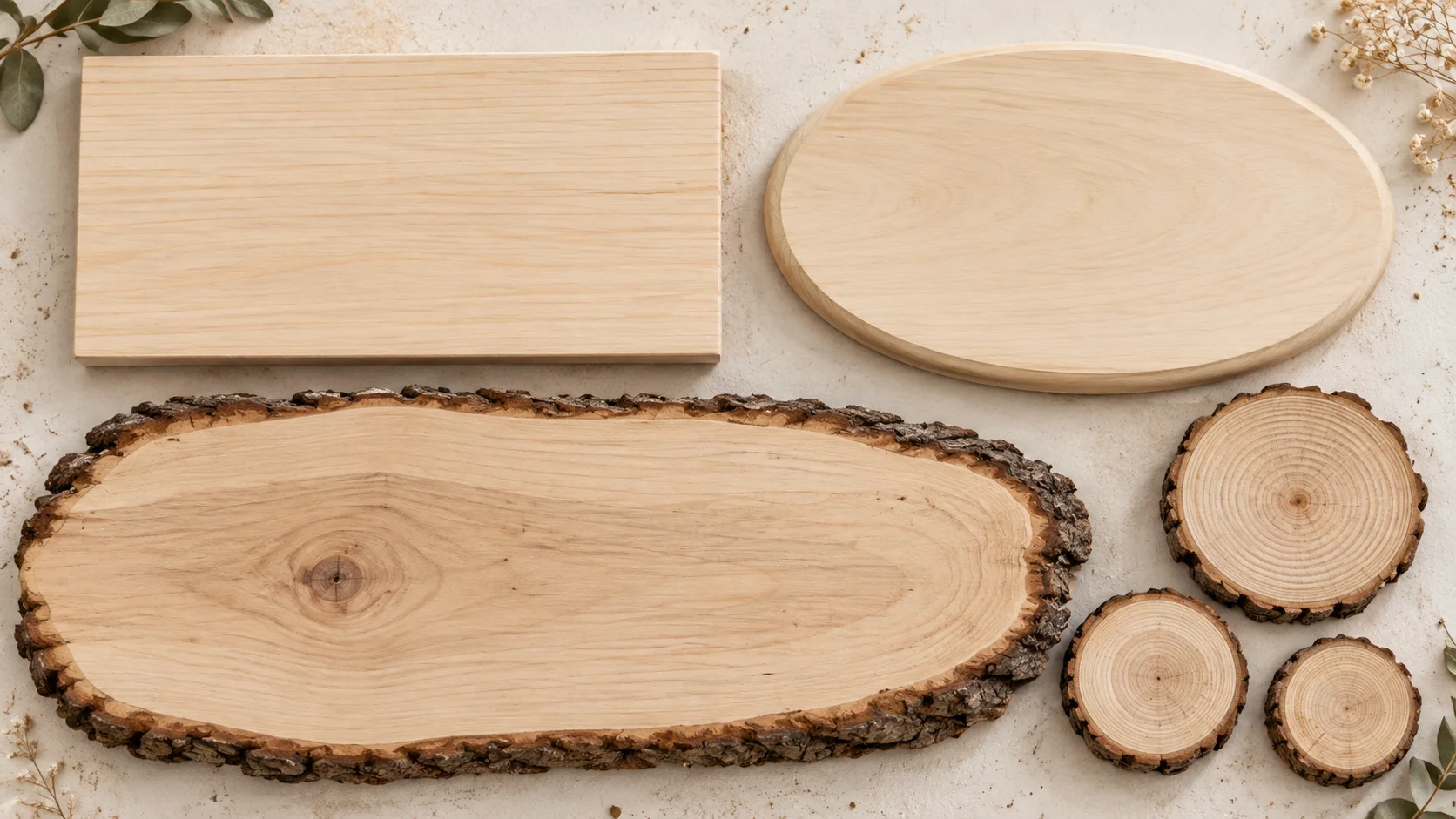
Before you transfer a design, find out what the blank is made from and what has been put on it. A smooth, pale surface can hide a coating or a glued core. If you cannot establish the material’s history, choose another piece.
For the beginner projects here, start with identified, untreated, unfinished solid wood. That is a material-selection rule, not a promise that its smoke is harmless. You still need suitable smoke control and safe handling of the hot pen.
Ask four questions before using a blank
- What species is it? Keep the packaging or supplier details rather than guessing from the grain.
- Is it solid wood? Check for veneer, glued layers or a manufactured core.
- Has it been treated or finished? Look for an explicit unfinished, untreated description, not just the word “natural.”
- Where has it been? Unknown storage, spills and previous uses matter, especially with reclaimed material.
If the answers are incomplete, ask the supplier before buying or using it. Do not heat a corner to see whether it smells unusual. A test burn checks technique on a suitable blank; it does not identify chemicals.
Keep these materials out of your project
| Material | Why set it aside? | Choose instead |
|---|---|---|
| Painted, stained, varnished or waxed wood | The heated area includes a coating, not just wood | A blank supplied unfinished |
| Pressure-treated timber | Preservatives are part of the material | Known untreated craft timber |
| Plywood, MDF, OSB or particleboard | Bonded construction includes adhesives or binders | A solid-wood blank for these projects |
| Pallets, driftwood and unknown reclaimed scraps | Treatment, contamination or prior use may be uncertain | Wood with a documented species and history |
| Moldy or decaying pieces | They introduce problems beyond the artwork itself | A sound, dry replacement |
Do not sand or strip a finished object and assume it is now suitable. Removing the visible surface does not establish the history of the rest of the wood. Keep the object for another craft, or use a new unfinished blank.
A pallet’s heat-treatment mark is not a record of everything it has carried. Likewise, “laser-ready” and “craft board” are not substitutes for construction details. Our plywood guide covers layered boards in more detail.
Inspect the piece, then plan the design
Material information comes first. Once that checks out, look at the actual blank rather than relying on a product photograph. Turn it over and inspect the edges as well as the face.
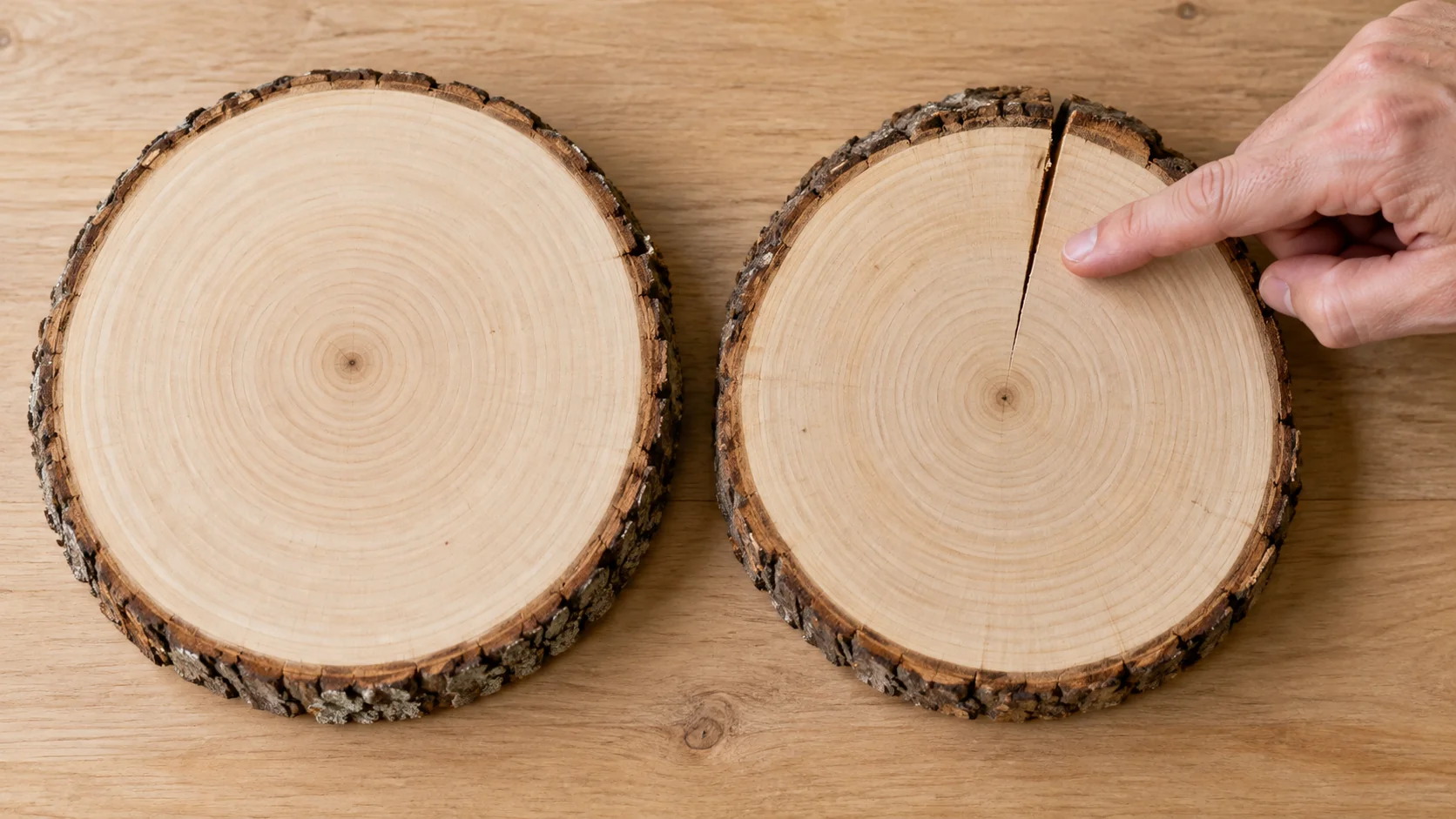
- Set aside unstable splits, loose sections and obvious decay.
- Check that bark and edges are secure before choosing a live-edge piece.
- Keep knots and rough patches outside a detailed design where possible.
- Do not treat an attractive grain pattern as proof of a suitable material.
A visual inspection finds physical defects. It cannot prove that a piece is untreated or identify every substance it contains. If the description and the delivered item do not match, resolve that with the supplier before working on it.
Choose a straightforward replacement
For a larger indoor decorative project, the Make Market 11-by-14-inch basswood oval offers a lightly sanded, kiln-dried surface. Inspect the actual piece for coatings, glue joints and damage before use, and size the pattern to its usable face.
For larger signs or several projects, compare dimensions in our wood blanks guide. For differences in grain, color and working feel, use the wood-species guide.
Do not interpret a species list as a list of harmless smoke. A familiar name does not remove the need for exposure control. For an unfamiliar or potentially sensitizing species, get reliable species-specific guidance before considering it for a project.
A mask does not fix the wrong material
Wood smoke contains particles and gases. N95 and P100 particulate filters do not remove gases or vapors. Respiratory protection needs to match the contaminants and fit the wearer; choosing a product labeled “fume mask” is not enough.
Do not keep a questionable blank simply because you own a respirator or a small desktop extractor. Replace the material first. Then arrange smoke control appropriate to the work, following the equipment instructions. An open window alone does not establish that exposure is adequately controlled.
Stop if smoke accumulates or your eyes or airways become irritated. Follow the complete safety guide for the workspace routine, hot-tool handling and what to do if something goes wrong.
Keep the next batch easy to identify
Store unused blanks with their supplier information. Separate known craft wood from workshop offcuts and finished pieces, so a future project does not start with another guessing game.
- Keep the species and construction details with the batch.
- Set aside damaged or questionable pieces immediately.
- Prepare and clear sanding dust before heating the pen.
- Apply a finish only after burning is complete and the piece has cooled.
When you cannot answer the material questions confidently, a replacement blank is the simplest way forward. Save your time for the design.