Solid-point or wire-nib: which pen type matches your skill level and style. We break down both, then rank the best pens for beginners through advanced pyrographers.
Key takeaways
- Solid-point pens give precise temperature control and excel at fine detail; wire-nib pens recover heat faster and cover area quicker
- Wire-nib systems (YIHUA, WEP) suit speed and versatility; solid-point pens (Craft Culture, Walnut Hollow) teach control and precision
- First pen matters less than learning one tool deeply; upgrade once you know your style, not before
- Temperature control beats a fixed setting; budget for variable heat if possible
When you’re starting pyrography, the pen you choose shapes how you learn. The difference between solid-point and wire-nib isn’t just a type label, it’s the fundamental difference between precision-first and speed-first approaches to burning.
Solid-point pens heat more slowly, giving you precise temperature control. Wire-nib pens recover heat instantly, letting you work faster across larger areas. Neither is wrong; they reward different techniques and learning styles.
The lineup, compared
| Type | Best for | Heat-up time | Temperature control | Skill floor | |
|---|---|---|---|---|---|
| YIHUA 939-II Two-pen system, 30 interchangeable tips, digital display | Wire-nib | Versatility, intermediate work, speed | Instant (2-5 sec) | Precise (digital 25-750°C) | Intermediate |
| Craft Culture Wood Burning Pen Affordable solid-point with variable heat | Solid-point | Fine detail, control, intermediate burners | Moderate (20-30 sec) | Good (adjustable heat) | Beginner to intermediate |
| Walnut Hollow Creative Woodburner Basic solid-point, entry-level price | Solid-point | Testing the craft, simple lettering, bold designs | Slow (30-60 sec) | None (fixed temperature) | Absolute beginner |
| WEP 939D-VI Dual pen station with variable control | Wire-nib | Professional detail and shading, advanced work | Fast (5-10 sec) | Excellent (variable 25-750°C) | Intermediate to advanced |
Best Overall Versatility: YIHUA 939-II Wire-Nib

- Adjustable 250–750°C via control knob
- 20 nibs — skew, wire & shader
- Station design with stable pen holder
Top pick
YIHUA 939-II Pyrography Station
Pros
- Two-pen system lets you keep one set for detail while the other handles shading, cutting setup time
- Digital temperature display reads exactly what you’re working with
- 30 interchangeable wire-nib tips cover everything from fine detail to bold shading
- Wire-nib pens recover heat instantly, letting you work quickly across large areas
- Fast learning curve for area coverage and speed-based techniques
- Grows with you through intermediate and advanced work
Cons
- Higher upfront cost than budget single-pen options
- Wire-nib tips require regular cleaning and eventual replacement
- Digital display adds complexity compared to simple on-off controls
The YIHUA 939-II is built for speed and versatility. If you want to cover large areas quickly and work with a system that scales with your skills, this station removes the frustration of constant tip-swapping. The two separate pens mean you can keep one set to fine detail while the other handles shading, cutting your setup time significantly.
Best Budget Solid-Point: Craft Culture Wood Burning Pen

- 9 interchangeable tips
- Adjustable temperature dial
- Heat shield; wood, leather & fabric
Affordable solid-point
Craft Culture Wood Burning Pen
Pros
- Variable temperature control lets you adjust heat for different wood and techniques
- Solid-point design teaches fine control and precision from the start
- Mid-range price between budget and professional options
- Lightweight but comfortable for extended sessions
- Good choice for detail-focused learners
Cons
- Single pen only; no dual-pen convenience
- Slower heat-up than wire-nib systems
- Limits speed for broad area coverage
Craft Culture offers solid-point control at an accessible price. If you want variable heat without the premium build of professional brands, this pen teaches precision and detail work without breaking the budget.
Best Entry-Level: Walnut Hollow Creative Woodburner
Budget friendly
Walnut Hollow Creative Woodburner
Pros
- True entry-level price; no financial risk if pyrography doesn’t stick
- Lightweight plastic handle; easy to control for beginners
- Replacement tips are available and affordable
- Simple on-off switch means zero setup fiddling; just plug and burn
- Reliable for bold designs, lettering, and simple patterns
Cons
- No temperature control; one heat setting for everything
- Fixed temperature means you can’t lower heat if you’re scorching or raise it for faster work
- Slower learning curve for fine detail because temperature is fixed
- Basic construction won’t survive years of heavy use
Start here if you’re testing whether pyrography is for you. Many people burn 50+ pieces on a Walnut Hollow before upgrading. It’s honest equipment: limited but reliable. After 2-3 months of regular use, you’ll know exactly what you want in a next pen.
Best Dual-Pen System: WEP 939D-VI
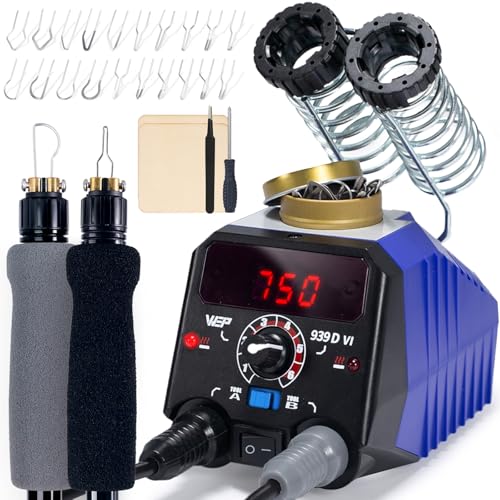
- Two detachable pens, A/B toggle
- Adjustable 250–750°C, LED display
- Holder-in-body, 20 wire-nib tips
Advanced versatility
WEP 939D-VI Dual-Pen Pyrography Station
Pros
- Dual-pen setup means you can keep separate tips set up for different styles of work
- Variable heat control lets you adjust temperature for different techniques
- Wire-nib design recovers heat instantly for fast, large-area coverage
- Stainless steel construction is durable and professional-grade
- Good for intermediate and advanced work where precision and speed both matter
Cons
- Higher upfront cost than single-pen options
- Wire-nib tips require regular maintenance and cleaning
- Not ideal for absolute beginners; better suited to intermediate learners
The WEP 939D-VI bridges wire-nib speed with the convenience of a dual-pen setup. Once you’ve mastered the basics and know you want both precision and area coverage in one system, this station delivers professional capabilities without the highest price tags.
Safety first: All pyrography pens reach temperatures that cause serious burns instantly. Never touch the tip; always use the pen holder provided. Keep the stand within arm’s reach and use it every time you set the pen down. Ventilate your workspace, wood smoke contains toxic fumes. These pens are not toys and demand respect.
The verdict
The verdict
If you’re buying one pen and want wire-nib speed and versatility, YIHUA 939-II wins with its dual-pen setup and 30 tips. For affordable solid-point control, Craft Culture offers variable heat without professional-grade pricing. If you’re testing the craft on a tight budget, Walnut Hollow is honest, no-frills entry. For advanced work combining both precision and speed, WEP 939D-VI delivers a professional dual-pen station. The best pen is the one you’ll actually use. Start with something that fits your budget and learning style, practice the fundamentals for 2-3 months, then upgrade once you know your preferences. Every professional pyrographer started with a basic pen and blank wood.
Pair your pen with: a complete beginner kit · the right wood to burn · a good pyrography book.
Common questions
Can I switch between solid-point and wire-nib techniques?
Yes. Many intermediate pyrographers own both: wire-nib for speed and shading across large areas, solid-point for fine detail and control. They’re not mutually exclusive, just different tools that reward different hand positions and pressure.
How often do pen tips need replacing?
Solid-point tips last hundreds of hours of burning. Wire-nib tips typically last 50-100 hours depending on pressure and temperature. It’s normal wear, not a manufacturing defect.
Is temperature control really necessary for beginners?
It helps significantly. Fixed-temperature pens force you to learn with one setting; variable pens let you lower heat if you’re scorching the wood and raise it for faster coverage. If budget allows, start with variable heat.
What’s the difference between a pen and a full pyrography station?
A pen is portable and has limited power; a station (desktop tool) is much more powerful and has a larger power supply. For hobby work, a good pen is enough. Stations are for production work, thick wood, or very detailed professional pieces where you need maximum wattage and control.
Do I need to buy all four pens?
No. Pick one based on your priority (versatility, precision, budget, or performance) and master it for at least 2-3 months. Upgrade when you hit its limits, not before.